

Biometric Turnstiles vs. Manual Classroom Roll-Call — Operational Flow Comparison
Clean, step-by-step campus workflow designed for principals, teachers, and parents with real-time updates.
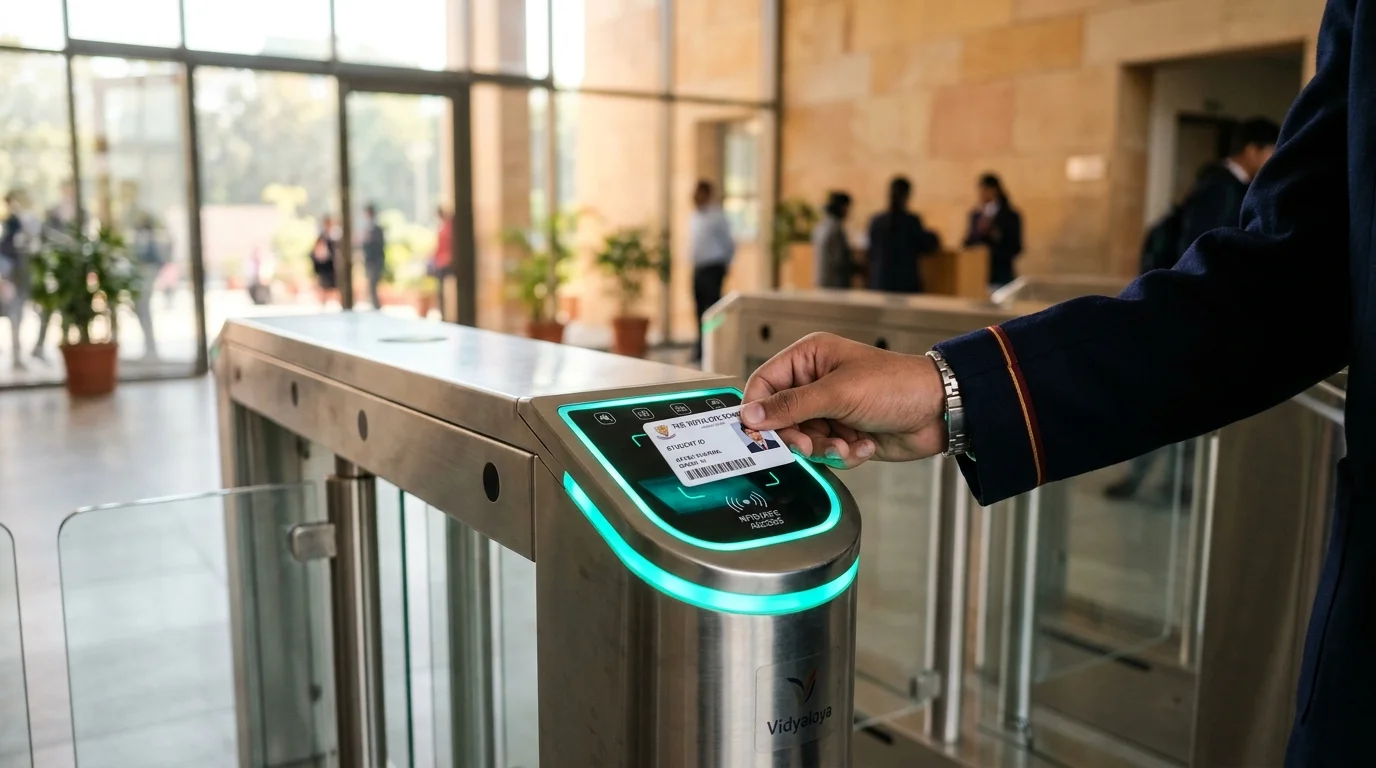
Objective Evaluation of Campus Attendance Methods#
Every educational institution must record accurate student attendance to ensure child safety, fulfill statutory state education board mandates, and evaluate examination eligibility. Historically, institutions have relied on manual paper registers marked by class teachers during morning assembly. In recent years, automated turnstile gate ingress has emerged as a rapid alternative.
The table below provides a factual, verifiable comparison between automated turnstile biometric systems and traditional manual roll-call registers.
Factual Feature Comparison#
| Operational Attribute | Manual Paper Roll-Call Registers | Automated Biometric Gate Turnstiles |
|---|---|---|
| Morning Instructional Time Lost | 10 to 15 minutes per classroom every morning (approx. 55 hours per teacher annually) | Zero instructional time lost (students are verified at the entrance gate before entering classrooms) |
| Verification Speed per Student | 15 to 25 seconds per student (calling names, waiting for response, marking register) | Under 0.8 seconds (RFID card tap) or under 0.3 seconds (dual-lens facial terminal) |
| Parent Notification Timing | Manual: Delayed until evening, periodic report cards, or absent phone calls made hours later | Automated: Dispatched via bilingual SMS and mobile app push within 5 seconds of gate passage |
| Vulnerability to Proxy Attendance | Vulnerable to peer proxy responses or misheard roll numbers in large classrooms | Prevented: Hardware turnstiles allow one student per rotation with anti-tailgating sensors |
| Offline Record Preservation | Dependent on physical paper registers which can be misplaced, water-damaged, or torn | Non-volatile flash buffer memory stores up to 100,000 punches locally during internet outages |
| Board Regulatory Reporting | Requires hours of manual compilation at the end of each month to calculate percentages | Instant, exportable compliance reports generated in one click for CBSE and State Boards |
| Capital Equipment Required | Low initial cost (paper books, pens), high ongoing educator labor cost | Requires physical turnstile gates and network cabling; low ongoing operational maintenance |
Detailed Operational Analysis#
Instructional Hour Preservation#
In a standard K-12 school with 40 sections and 1,600 students, conducting manual morning attendance consumes an estimated 2,200 collective teacher hours every academic year. Implementing automated entrance turnstiles transfers this verification to the physical campus perimeter, allowing classroom teachers to begin academic instruction the instant morning bell rings.
Parent Reassurance and Transparency#
When a student fails to arrive at school in the morning, time is of the essence. Manual attendance systems typically result in delayed parent notifications because teachers cannot pause instruction to make individual phone calls to working parents. Automated gate turnstiles eliminate this delay by streaming punch timestamps to notification queues, alerting parents before morning classes even commence.
To learn more about implementing automated hardware gates on your campus, explore our Biometric Attendance System.